
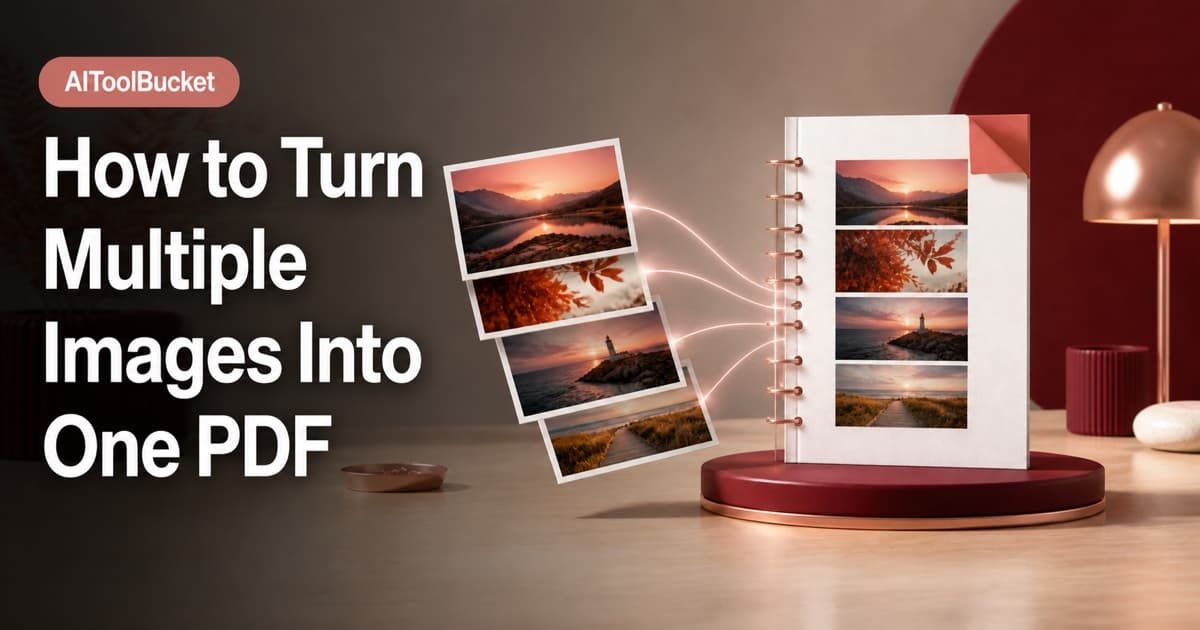
An image-to-PDF workflow is ideal when several scans or photographs need to travel as one document. Order, orientation, margins, and source resolution determine whether it feels professional.
What to know before you start
Correct images before conversion. Rotate sideways photos, crop desk edges, improve contrast, and remove accidental duplicates.
Very large phone photos can make a huge PDF without improving document readability. Resize consistently while retaining enough detail for small text.
A reliable workflow
- Gather images into one folder and rename them in page order. Do this deliberately rather than rushing to the next control. A quick check at this stage is easier than discovering a preventable problem after the file has been downloaded, shared, or added to another workflow.
- Rotate and crop every page before uploading. Do this deliberately rather than rushing to the next control. A quick check at this stage is easier than discovering a preventable problem after the file has been downloaded, shared, or added to another workflow.
- Arrange thumbnails in the final sequence. Do this deliberately rather than rushing to the next control. A quick check at this stage is easier than discovering a preventable problem after the file has been downloaded, shared, or added to another workflow.
- Choose a consistent page size and sensible margins. Do this deliberately rather than rushing to the next control. A quick check at this stage is easier than discovering a preventable problem after the file has been downloaded, shared, or added to another workflow.
- Create the PDF, then inspect transitions and text sharpness. Do this deliberately rather than rushing to the next control. A quick check at this stage is easier than discovering a preventable problem after the file has been downloaded, shared, or added to another workflow.
Try it with your own file
Use the focused tool, review the result, and download only when it looks right.
Open Image to PDFBrowse all toolsDetails that improve the result
- Use even lighting when photographing documents.
- Keep receipts at a resolution that preserves fine print.
- Run OCR later if the PDF needs searchable text.
These details are small enough to miss when the task feels routine, yet they usually separate a merely completed job from a dependable result. Apply them in context rather than treating them as rigid rules. The right choice depends on the source material, the destination, and what the next person needs to do with the output.
Common mistakes to avoid
- Mixing portrait and landscape images without review.
- Uploading full-resolution photos when a smaller copy is sufficient.
- Assuming the PDF becomes searchable automatically.
If something looks wrong, return to the earliest stage where it appears. Repeating the final action with the same inputs rarely fixes a source-quality, ordering, formatting, or privacy problem. Change one variable at a time, create a fresh output, and compare it with both the original and the previous attempt.
How to judge the finished result
Review the output at the size and in the environment where it will actually be used. A file that looks acceptable as a small browser preview can reveal soft text, clipped edges, missing content, or awkward spacing when opened full size. Conversely, a tiny imperfection visible only at extreme zoom may not matter for a normal screen-reading workflow. The destination—not the editor preview—sets the practical quality standard.
Check meaning as well as appearance. Names, dates, totals, page order, links, headings, and important labels deserve a deliberate comparison with the source. For image to pdf, visual polish cannot compensate for a changed value or omitted piece of information. If the result will be submitted to an employer, customer, school, government portal, or public website, reopen the downloaded file in a second application before sending it.
Finally, consider the recipient. Use a descriptive filename, avoid unexplained abbreviations, and keep the output reasonably sized. If the file is one part of a larger process, note what was changed and retain the untouched source. That simple record makes later corrections faster and prevents a derivative copy from becoming the only surviving version.
Privacy and file-handling checklist
- Use the minimum necessary data. Remove unrelated pages, records, metadata, or personal details before uploading or sharing anything.
- Keep an original. Save the source separately and give the processed copy a new, descriptive filename instead of overwriting it.
- Understand the destination. Check file-size, format, dimension, and accessibility requirements before optimizing for the wrong target.
- Inspect the download. Open the actual exported file; do not assume the on-page preview and downloaded result are identical.
- Share deliberately. Confirm the intended recipient and avoid public links for documents or images containing private information.
- Clean up working copies. Remove unnecessary local downloads from shared or public devices after the task is complete.
A practical example
Imagine that the output is due in ten minutes. The fastest safe approach is not to click through every option. First define the required result in one sentence, choose the smallest suitable source, and complete the workflow above once. Then compare the downloaded file against that sentence. If it satisfies the destination requirements and preserves the important information, stop. Extra processing can introduce new loss, formatting drift, or confusion without adding useful value.
For recurring work, save a short checklist based on the steps and mistakes in this guide. Consistency matters more than remembering every setting. A repeatable process also makes it easier to explain what happened when a colleague asks how the final file was produced.
Continue the workflow
Merge PDF files · Convert PDF pages back to images
Frequently asked questions
Will the PDF contain selectable text?
No. Images remain images unless OCR is applied.
Which image format works best?
JPG is efficient for photos and scans; PNG is useful for screenshots and crisp graphics.