
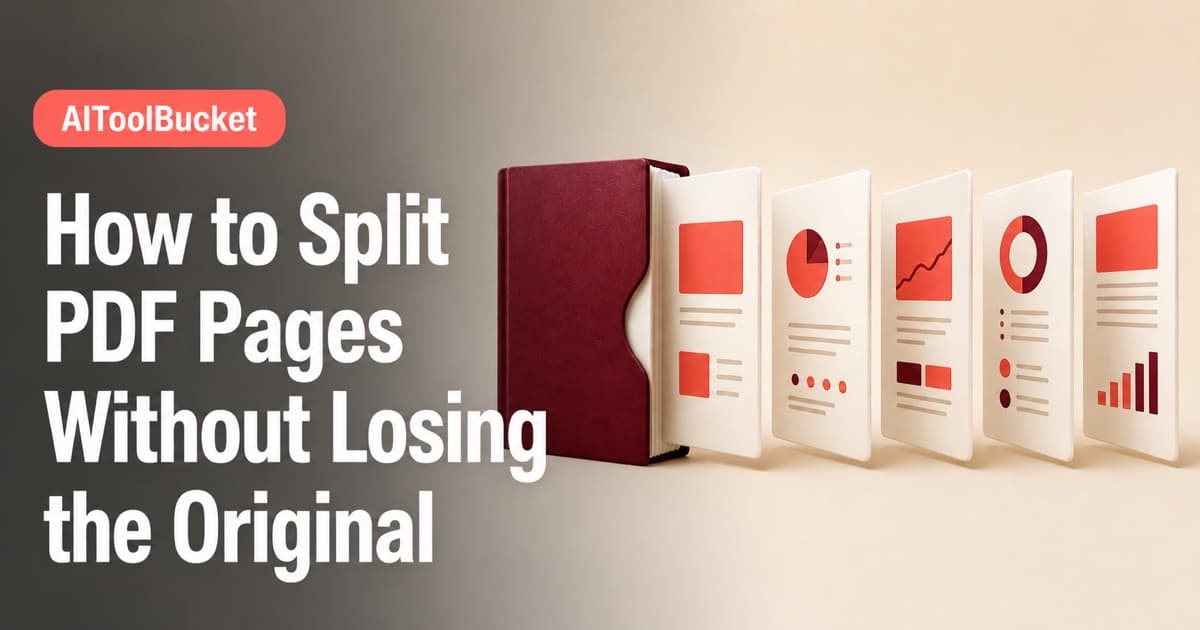
Splitting is the cleanest way to share one chapter, invoice, certificate, or signed page without sending an entire document. The important step is verifying page numbers against the visible content, not the printed numbering.
What to know before you start
PDF page 1 is not always the page labelled 1. Covers and front matter can shift printed numbering, so select from thumbnails or confirm the page counter first.
Treat splitting as creating a new derivative file. Preserve the original, especially when it contains signatures, form fields, bookmarks, or legal records.
A reliable workflow
- Open the source and note the first and last visible page you need. Do this deliberately rather than rushing to the next control. A quick check at this stage is easier than discovering a preventable problem after the file has been downloaded, shared, or added to another workflow.
- Upload the file and select a range or individual pages. Do this deliberately rather than rushing to the next control. A quick check at this stage is easier than discovering a preventable problem after the file has been downloaded, shared, or added to another workflow.
- Use separate outputs when recipients need different sections. Do this deliberately rather than rushing to the next control. A quick check at this stage is easier than discovering a preventable problem after the file has been downloaded, shared, or added to another workflow.
- Download with a filename that describes the extracted content. Do this deliberately rather than rushing to the next control. A quick check at this stage is easier than discovering a preventable problem after the file has been downloaded, shared, or added to another workflow.
- Open the result and confirm no adjacent confidential page was included. Do this deliberately rather than rushing to the next control. A quick check at this stage is easier than discovering a preventable problem after the file has been downloaded, shared, or added to another workflow.
Try it with your own file
Use the focused tool, review the result, and download only when it looks right.
Open Split PDFBrowse all toolsDetails that improve the result
- Use individual selection for non-consecutive exhibits.
- Extract first, then compress the smaller result if needed.
- Include a cover page when the excerpt needs context.
These details are small enough to miss when the task feels routine, yet they usually separate a merely completed job from a dependable result. Apply them in context rather than treating them as rigid rules. The right choice depends on the source material, the destination, and what the next person needs to do with the output.
Common mistakes to avoid
- Relying only on printed page numbers.
- Overwriting the only copy of a signed PDF.
- Forgetting that bookmarks and cross-page links may no longer make sense.
If something looks wrong, return to the earliest stage where it appears. Repeating the final action with the same inputs rarely fixes a source-quality, ordering, formatting, or privacy problem. Change one variable at a time, create a fresh output, and compare it with both the original and the previous attempt.
How to judge the finished result
Review the output at the size and in the environment where it will actually be used. A file that looks acceptable as a small browser preview can reveal soft text, clipped edges, missing content, or awkward spacing when opened full size. Conversely, a tiny imperfection visible only at extreme zoom may not matter for a normal screen-reading workflow. The destination—not the editor preview—sets the practical quality standard.
Check meaning as well as appearance. Names, dates, totals, page order, links, headings, and important labels deserve a deliberate comparison with the source. For split pdf, visual polish cannot compensate for a changed value or omitted piece of information. If the result will be submitted to an employer, customer, school, government portal, or public website, reopen the downloaded file in a second application before sending it.
Finally, consider the recipient. Use a descriptive filename, avoid unexplained abbreviations, and keep the output reasonably sized. If the file is one part of a larger process, note what was changed and retain the untouched source. That simple record makes later corrections faster and prevents a derivative copy from becoming the only surviving version.
Privacy and file-handling checklist
- Use the minimum necessary data. Remove unrelated pages, records, metadata, or personal details before uploading or sharing anything.
- Keep an original. Save the source separately and give the processed copy a new, descriptive filename instead of overwriting it.
- Understand the destination. Check file-size, format, dimension, and accessibility requirements before optimizing for the wrong target.
- Inspect the download. Open the actual exported file; do not assume the on-page preview and downloaded result are identical.
- Share deliberately. Confirm the intended recipient and avoid public links for documents or images containing private information.
- Clean up working copies. Remove unnecessary local downloads from shared or public devices after the task is complete.
A practical example
Imagine that the output is due in ten minutes. The fastest safe approach is not to click through every option. First define the required result in one sentence, choose the smallest suitable source, and complete the workflow above once. Then compare the downloaded file against that sentence. If it satisfies the destination requirements and preserves the important information, stop. Extra processing can introduce new loss, formatting drift, or confusion without adding useful value.
For recurring work, save a short checklist based on the steps and mistakes in this guide. Consistency matters more than remembering every setting. A repeatable process also makes it easier to explain what happened when a colleague asks how the final file was produced.
Continue the workflow
Merge selected PDFs · Edit a PDF online
Frequently asked questions
Does splitting alter the selected pages?
A well-designed splitter copies selected pages into a new PDF without recreating their visible content.
Can I extract non-consecutive pages?
Yes. Select individual page numbers or create more than one range, depending on the tool.